
on furries
fetish porn, money, and respect

This post includes some images that are not explicit, but are likely NSFW.
It is December, which means I am doing all my digital cleanup and filing of everything I have made this year— updating online portfolios, clearing out harddrives, etc. So far I have made 35 paintings this year, and should finish at least 3-5 more by the end of the month, on top of what should round out to about 150 smaller drawings and illustrations for clients. In case it does not register, that is a lot of art to make in a year.
I do at least three paintings each month to cover my part of rent— $200 apiece— and three sketches a week to cover everything else— about $150-$200 all together each week, depending on how generous the tips are. This is the first year in a while that I have relied entirely on freelance work for income, and at this rate I’ll wind up having made a cool $17k this year. This is considered a pretty good income for my niche, based on the standards of internet subcultures that set their prices agnostic of where anyone lives. It beats retail, if only because I am making something and selling it and keeping the money my clients pay for it (rather than making money for someone else, selling plastic-and-silicone crap made by child-slaves in the third world, and scraping up whatever loose change my boss is legally obligated to give me).
The majority of my client work is a combination of concept design and digital painting. People send me art or photo references of a character from their D&D campaign or whatever along with 3-5 keyword prompts, which I use to design an outfit and then make a painting of the character in the style of fashion photography.
Of everything I made this year, I think this one is my favorite.
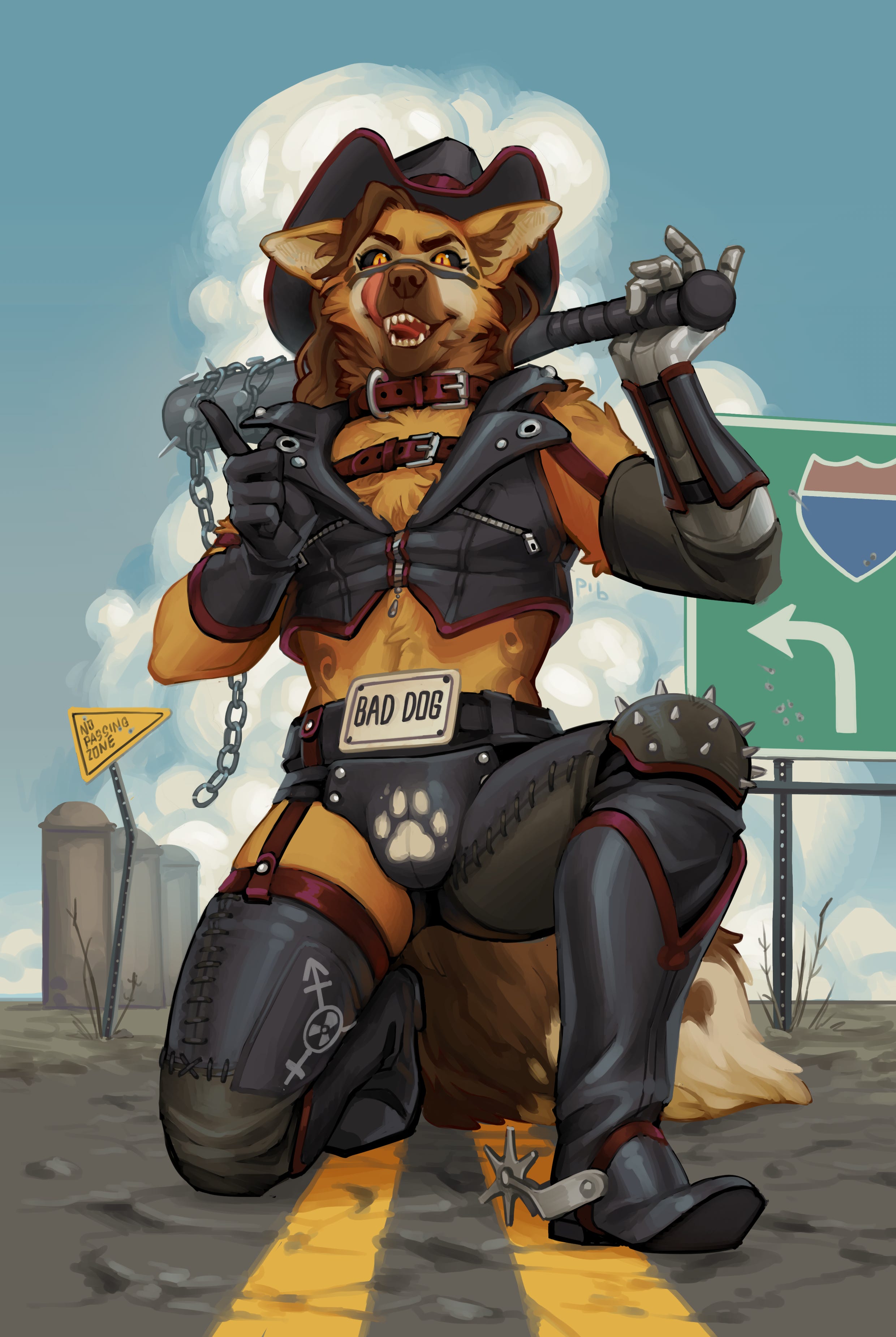
I’ve maintained a sort of kayfabe on here by describing myself as a freelance illustrator, knowing that most people who think “freelance illustrator” imagine editorial art or greeting cards or logo designs, not doing commissions for furries on twitter. As I’m sure you can imagine, I have pretty mixed feelings about it myself.
YES, THERE IS A LOT OF PORN
The prevalence of fetish porn is the primary thing that makes other artists wrinkle their noses when I mention working for furries, so let’s get one thing clear right off the bat: pornography is good. It is good that it exists. Quite a lot of extremely high-quality art is pornography, and does not bother pretending it’s anything else.
I can’t remember who I saw make the case— it may have been Natalie Wynn in her three-hour epic on heterosexuality— that the cringiness of pornography is inescapable, regardless of how fringe-or-not your tastes may be. Desire is inherently vulnerable, and losing oneself in the indulgence of that vulnerability is what makes sexual desire so powerful. So porn is good, and yes it is also cringe, but being cringe is why it is good. Porn that attempts to be totally free of cringe can never succeed, because eroticism requires the presence of risk. Do not whine to me that furries are perverts— everyone is a pervert, and perverts are good, grow up. The primary obstacle between you and a bespoke spank bank of your own is shame, which is a tragic reason to deprive oneself of private pleasures.
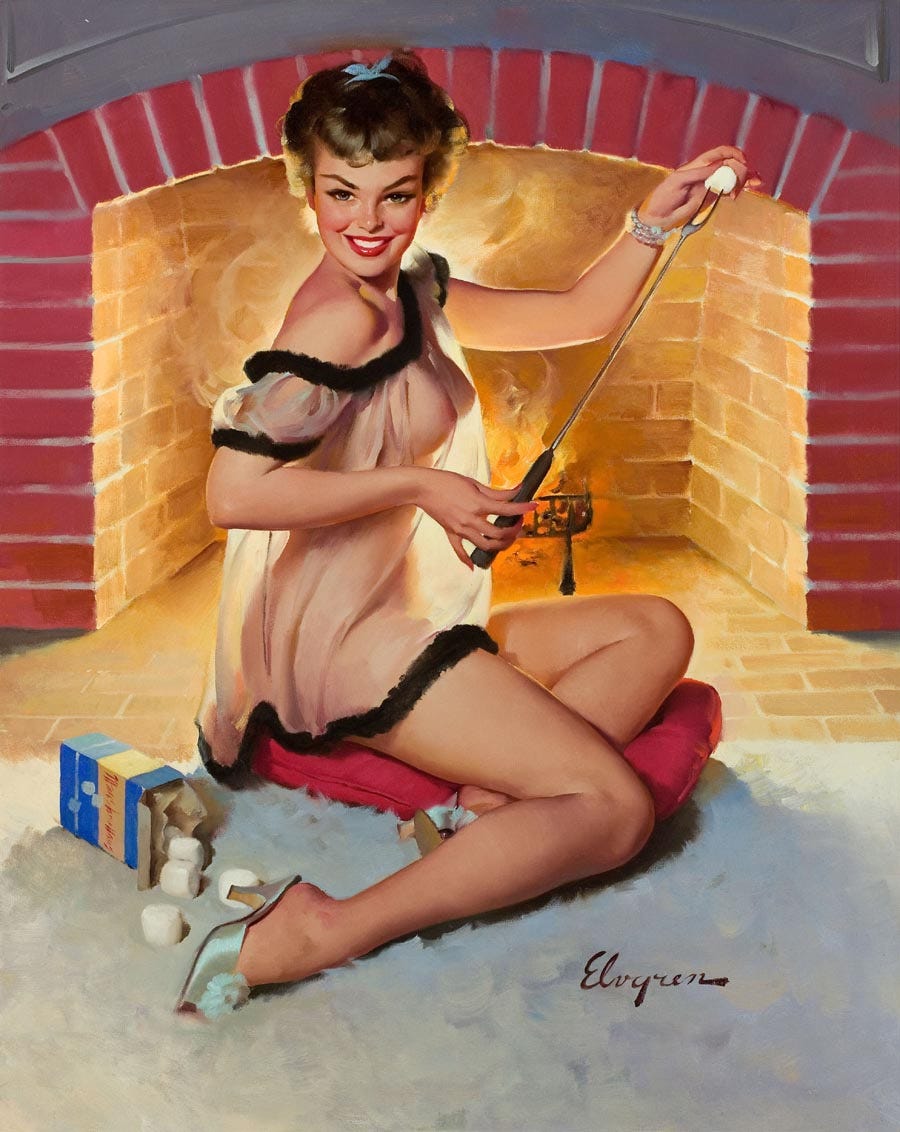
There is a little bit of this vulnerability play in the dynamic I have with clients— the way I get to indulge people’s vulnerable desires is an abstraction of the way a dominant safely indulges their submissive, I just don’t (literally) get off on it. I did a lot of the same when I worked at a sex shop, talking to people in a polite and calming way about their pleasures so as to minimize their shame and light up their curiosity. I take great joy in doing this. It feels like a meaningful way to improve others’ lives, handing them tools that might strengthen their self-understanding (and demonstrating that at least some men are capable of talking about sex without being extremely weird about it).
At minimum, I think it is good for my moral character to regularly meet people whose tastes make me blush1 and choose to treat them like normal human beings worthy of my respect and collaboration, to practice warmth and professional boundaries on something more personal than selling people chicken sandwiches or troubleshooting their internet connection or whatever. And sometimes, I spend every minute hunched over my iPad going “oo hoo hoo hoo!!!” because I get to draw a literal bull dyke dressed up as a Landsknecht, and I think, “god, you losers working for Demdaco wish you were me.”
I have no idea how common it is for the average person to be unphased by, or even celebratory of, pornography; judging by my customer interactions at the sex shop, my chill attitude about sexuality (especially fetish sexuality) is relatively uncommon. Tom of Finland is basically a household name at this point, but I do not know a lot of straight people whose groupchats include sharing the porn they like. It is one thing to keep your sexy mouse girl fetish drawings hidden in a drawer to be discovered after your death; it is entirely another to draw sexy mouse girls for 30-40 hours a week, and then go out into the world and tell people to their faces that that is what you do for a living, and also it is pretty cool and you are a bit of a big name in the scene. Plenty of people who love Tom of Finland art as a kind of kitsch do not have leather daddy friends, you know.
PROFESSIONAL CRINGESMITH
In Patricia Taxxon’s video “Art, Furries, God,” she uses “cringy” internet remixes to explain the appeal of sincerely stupid outsider art as a whole, within the framing device of her choice to embrace furry art in her videos and album art. As she says, “I wish I could have an idea this bold-facedly stupid and play it this straight and execute it this well.” Personally, I would prefer not to be making what she calls “stupid art,” but the point I take from this is once again about vulnerability: there are a lot of ways to be great at art, and all of them require the willingness to risk looking stupid.
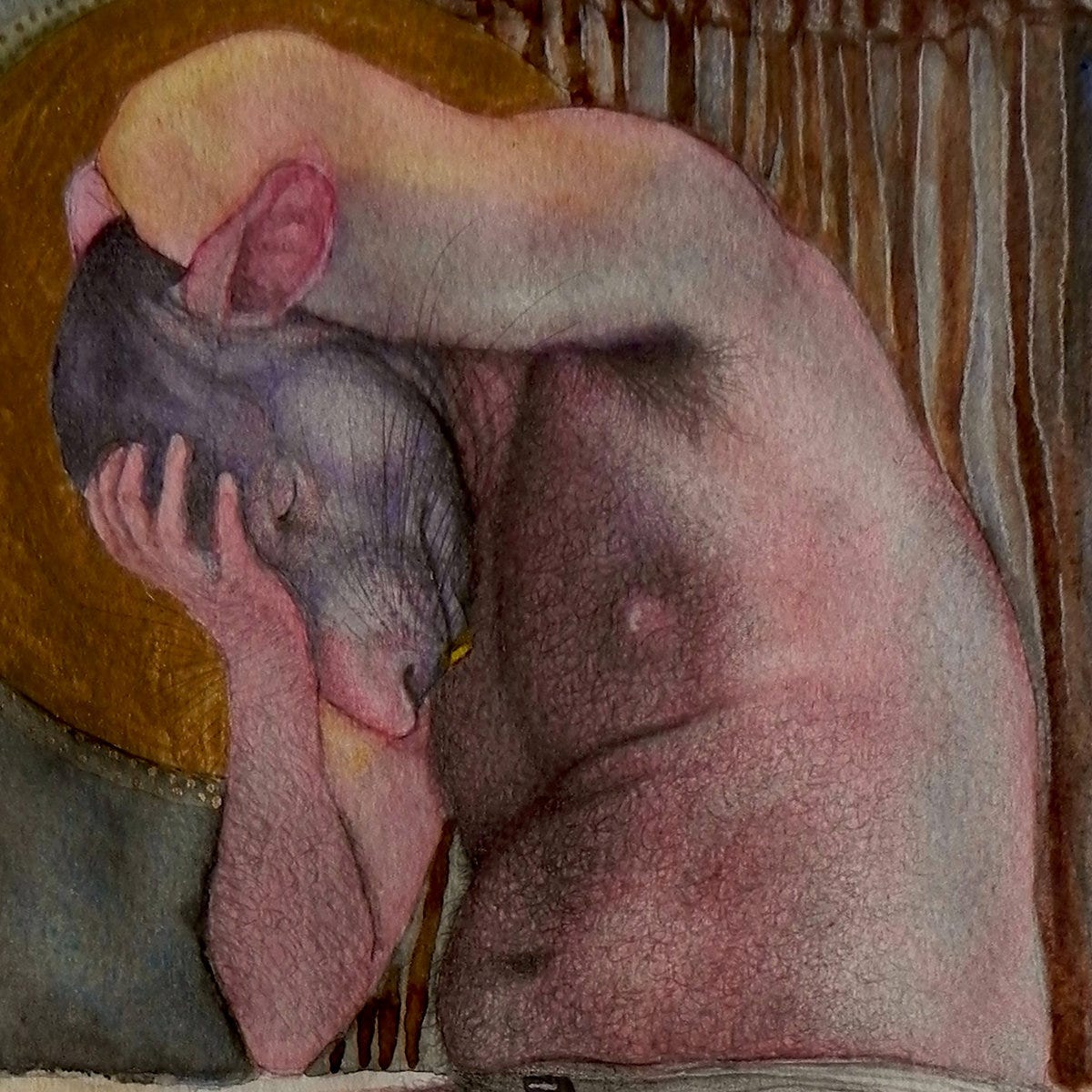
I admire her very much because I am a coward and she is not; she sprints downhill at the challenges she sets for herself, she makes things obsessively and with great fervor, and she does it all based on her own standards— standards which make her actively opposed to things like “normie appeal” and “making money” as remotely worthy means-and-ends for art-making. I am proud of the fact that I not only contributed one of the alternate covers to her Little Spoon album, but that I designed that little tiara-wearing cartoon dog that she uses to represent herself in every video she’s made since 2019. I can honestly say that I got name-checked by an art critic I admire in a video which has been viewed over five hundred thousand times, but… the video is about something only us angry internet nerds care about, and the social media profile she links when crediting my work2 is mostly full of pornography. To most people, it could not matter less that I am very good at what I do when that thing happens to be cartoon porn.
So I can’t tell if I am relieved or insulted that my boyfriend’s family back in Kansas— wonderful, loving people that I want very much to like me and think I am good for their son— don’t ever ask to see the art I make day-to-day. When I imagine showing my “best work of the year” at Thanksgiving, I think of Rekha Shankar’s Sexy Kirby sketch. The paintings that I have spent a lot of time and effort on are not something I readily show to Serious And Professional People, and I would cut off my own head before willingly showing them to religious midwesterners with young children. But my artistic skill is almost singularly load-bearing for my sense of self-worth, and when I cannot show the work that I make with it, it feels like I make nothing at all. And if I’m not making things— beautiful, meaningful, impressive things— then what good am I at all, especially when the rest of me is so hard to endure?
BENEVOLENT WEIRDOS
Nicky Woolf made a very good documentary podcast titled Fur & Loathing, where he interviews several furries about the personal nature of fursonas as— paradoxically— self-expression which is both aspirational and freeing. He also explains that furry is unique among fandoms in that the thing furries are fans of is not a product or an intellectual property, but the community itself and its social and creative practices. The “furries are weird and horny” reputation has made them a (mostly queer) subculture which has consistently resisted cooption by big business and advertising. More relevant to the podcast: furries have also resisted infiltration by nazis, and (in my own experience) are equally militant at ousting animal abusers and raising money for charity, with conventions regularly raising six figures for charity drives and auctions.3
Furries are one of the few online scenes I would call a real community. They are certainly the only demographic I have ever met who often have a monthly art budget. Among my clients, they are uniquely generous with money, praise, and recommendations, such that impressing (or disappointing) one will lead word to spread among all of their friends. Most of the illustrators I know who make a comparable living to mine are people who sell merch via online shops or the anime/gaming convention circuit, an endeavor that is heavily front-loaded with start-up expenses and unpaid labor. I, on the other hand, get to work with people who literally line up at my digital doorstep, who sometimes pay double my rate or buy me videogames just because they feel like it. Normies want products; furries are patrons, in the renaissance sense of the term. They pay me to flex both my creative intellect and my technical skills, buying my labor less because they want to own what I give them than because they want to see an artist fat and happy.
Furries are a mixed-class community in a way that allows those with white-collar jobs in tech or the military to give to those without, and art is one of the means by which that exchange happens. I get to make work that is personally meaningful to kind and enthusiastic people, they get to feel communal loyalty and jerk off over the high-quality pornography I drew for them. Everyone wins. No queer scene, no fandom, have ever been a fraction so generous to me as furries have— they are up there with the Insane Clown Posse as proof that a community’s weirdness and benevolence are directly proportional. If anyone is ever going to make it to heaven, it’s the freaks.
All of this is great and beautiful, something that broader communities of care, such as the queer and trans masses who want to call themselves “communities,” could stand to take a few pointers from. And yet, it’s still never enough. I still don’t have health insurance, I have more or less given up on ever getting top surgery, and therapy would cost half-or-more of my weekly earnings. I get my groceries at Dollar General, and I share a studio apartment that is too small to host my own birthday party. I moved to a city with more going on than the place I came from, and I can’t afford to do most of the things I desperately want to do here.
The care and financial support of this community have never been remotely close to what I would earn with a “respectable” day job. No matter how much I praise the good hearts and joyful creativity of my clients, or how I feel like furry art’s reputation for being “weird” is a good thing, I just do not have the stability or freedom provided by a $40k/yr salary. I don’t think I ever will, at least not doing this, and since it’s not lack of skill that’s holding me back from getting or keeping those kinds of jobs, it feels like a gross personal failure. There is also the tension of knowing that every additional hour I spend on a painting inches my income closer to dropping below minimum wage— I could make more paintings (and therefore more money) if only I made them worse, but I have done that before, and it makes me so depressed that I avoid the work in favor of constant day-drinking just to outrun the fantasies of walking into the lake.

THE CHASM
This week I signed up for a zoom workshop at Spudnik Press, a very cool print shop co-op here in Chicago, about artist self-promotion. The teacher was experienced in both running a business as a fiber artist and working for various non-profits, as well as living the life of a starving artist who cannot afford expensive accounting software. We talked about writing artist statements, press releases, newsletters, grant applications.
All of that is nice, it is useful, I picked up some tidbits, but it did not resolve the primary hurdle between me and making money off of my work: the work I make is uncouth. Like the rest of me, my work is obscene, perverse, unprofessional, frustrated, stupid, cringe. Part of me says that this is what makes my art real art in a way that few others are capable of— my dedication to intensive labor for the sake of elevating the strange and challenging into something beautiful and compelling, my striving for so good they can’t ignore you kind of craft, is what makes my work better than that of those who crank out sloppy, low-hanging-fruit that appeals only to the sensibilities of the professional class. I want to believe that my labor and craft and personal connections with the people who like what I make are all worth something real and human, even if no one else recognizes it. I want to believe that it is good, actually, that I cannot leverage my skills for respectability, money, or fame— being not-very-profitable is part of what gives the work meaning.
Plus, it’s a lot of fun. It sparks joy.
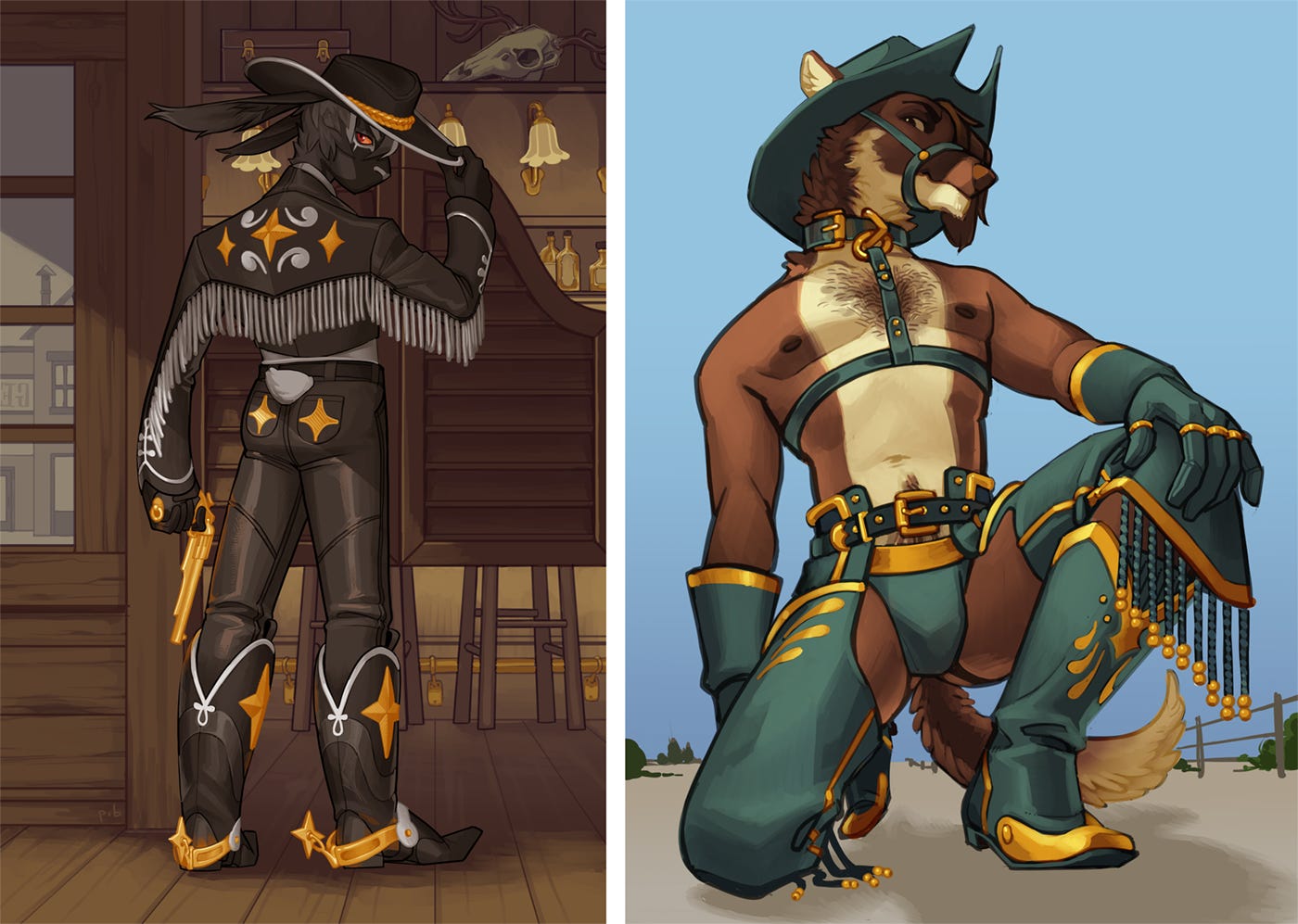
Another part of me says that this is just what I do because it is literally the only thing that pays and doesn’t make me want to kill myself, because I somehow find it far less degrading than retail or waitressing. Part of me would prefer to do something else— something that other people don’t find goofy and cringe— and feels that the influence of money and reputation have made my work cowardly and impersonal in other ways.4 I fret often that the bulk of my artistic output is fundamentally embarrassing because I do not know how to explain its worth to the professional class who might offer me a job with benefits, a resume line item that I could show off to new acquaintances (or my partner’s family) to explain that I do in fact do things with my time and talents— anything that would make me not feel horribly incompetent at Work and inferior to my fellow alumni who have published graphic novels, contributed editorial illustrations to national publications, drawn the floral patterns that they print on throw pillows sold at Target, etc.
I would like to feel the kind of confidence that says I know who is deserving of disdain and who is respectable, and where I land on that spectrum, and how I feel about my place. But I don’t. I do not determine those things for myself; I am always at the mercy of other peoples’ perceptions of me, and I can’t pretend that this fact doesn’t make me sweat. I just make what I make and try to pay rent, and hope that one day something will be different, either in me or in the world I am forced to live in. It seems like that is all anyone does anymore.
Although, I have to be honest: terrible character designs are at least as common as weird porn, while making me cringe significantly harder. Every time you ask some poor sod to draw your cluttered-ass, four-armed, multicolored high-contrast pelt-having hybrid-animal fursona, god kills an artist.
Ten thousand followers who have funded my livelihood for most of the last decade, thank you very much.
The actual point of this podcast is to investigate the Midwest FurFest 2014 chlorine gas attack. Someone set off a makeshift chlorine bomb in a hotel where a furry convention was being held and it put 19 people in the hospital, making it the highest-casualty chemical attack on US soil ever. Newscasters thought it was so funny they couldn’t get through the teleprompter without cracking up, and no perpetrator has ever been tried.
Notice that I’m not posting pictures of my sexy animal persona, here, am I?