

on testosterone
masculine biopolitics & the american war machine

Apparently this week, Defense Secretary Pete Hegseth announced that he is going to start requiring yearly tests for troops over 30, to check if their testosterone is up to snuff. If it isn’t, they’ll be offered hormone replacement therapy.
This is a mix of hilarious and extremely creepy. Hegseth seems a more-than-a-little-bit obsessive about the “masculinity” of military personnel, by which he usually means their level of frothing nationalist bloodthirst. According to The Hill, he says:
While we invest heavily in our weapon systems, platforms and gear, our most decisive tactical advantage will always be the individual warfighter. We have a sacred duty to maintain that advantage, which is why we must constantly look for new ways to optimize your performance, your resilience and your long-term health.
This initiative it’s not about artificial enhancement; it’s about restoring and optimizing your natural capabilities, protecting your longevity, ensuring you have the biological foundation required to sustain and fight. We owe our warriors the absolute best medical care in the world. And this program delivers on that obligation.
Wow, okay! That’s a lot to unpack.
Let’s start by talking a little bit about testosterone— what it does and what it doesn’t, and why the military of all places is so worried about it.
I. THE FEAR
I have been taking testosterone for about ten years now. Ever since the beginning, I have had conversations with the testosterone-curious, and have had the honor of walking several people through their first T shot. Of course, it’s one thing to have a doctor hand you a sheet of paper that lists the effects of a medication, and another thing entirely to talk to someone who’s actually done it, who can tell you that everything will be okay.
I enjoy doing this service for other people, but I won’t bother repeating the basic mechanical info you can easily find on google. The medical nitty-gritty is rarely what people are asking me about, anyway. What they really want is someone to soothe The Fear.
In case you somehow haven’t noticed yet, testosterone has accumulated a lot of baggage in the public consciousness. It’s associated with rage, violence, and an insatiable libido— y’know, the stereotypical Man Crimes. In recent decades, that old sexist chestnut of “women are naturally prosocial and emotional, men are naturally aggressive and unemotional” has been increasingly blamed on our hormones.
It seems that hormones and genes are so complex, and do so much coordinated heavy-lifting for regulating our bodily systems, that you can blame one or both for just about any unfalsifiable nonsense you can cook up.
There are a couple of important things to know about testosterone that your doctor (or your seargeant?) probably won’t tell you. First: everyone needs both testosterone and estrogen for various physical processes. You already have both in you, regardless of whether you have ovaries or testes sort of dominating the scene. It’s really nothing to get all fixated and worked-up about, it just is what it is.
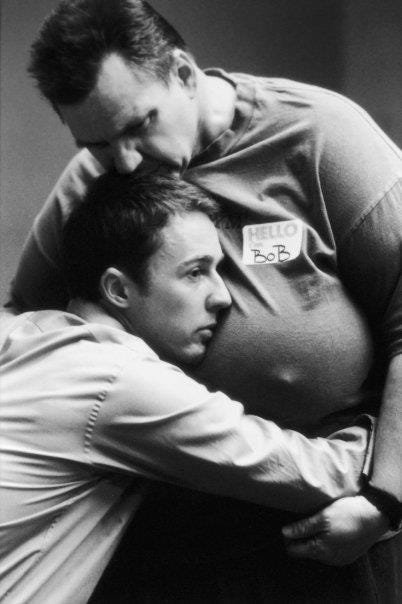
Second: If your testosterone is “too high”— as in, there is a bit too much just floating around in your bloodstream, doing nothing-all-that-useful— your body breaks it down into estrogen, a sort of evolutionary safety valve to prevent your heart from exploding or whatever. This is why trans men are advised not to just take as much T as possible, to hasten the boy-ification process— it sort of defeats the point of taking it at all, if what you want is the effect of masculinizing your appearance. Testosterone aromatisation also why overzealous bodybuilders can develop gynecomastia— but you probably knew that already, if you remember Bob from Fight Club (1999).
Third: One of the most obvious visible signs of high testosterone is male-pattern baldness. Of course, everyone goes bald eventually, but that striking young chrome dome sitting three cubicles over may well be the most high-T alpha chad in the room. You have my permission to giggle at the mental picture of Hegseth’s future egghead-only army, but you can see the first inklings of The Fear in there: the very chemical that is supposed to improve one’s libido has an uneven effect on the features we consider essential for handsomeness.
That’s one version of The Fear that I encounter when I talk with people who are untangling their preemptive anxieties about their desire do a little testosterone, as a treat. People who enjoy sex as a hobby, or who like to build their social network through cruising and hookup apps, or who have just generally been rewarded for being “a hot person” in life— all sorts are are afraid that T will make them unfuckable.
Unfortunately, there’s not much I can say that will soothe them and be honest at the same time. I probably don’t have to tell you that people are shallow, especially on apps that let you reject-or-admit someone into your life just by swiping a profile pic. If you start HRT for gender-y reasons, “second puberty” lasts about as long as the first one, and is approximately as awkward. You will spend at least a few years with acne, a wispy little mustache, a cracking voice, etc, until things settle in. It will take time to get used to the new-and-different smell of your own body, the texture of your hair, and yes, your below-the-belt situation will both look and function differently. But not that differently.
Of course, adults can be as cruel as teenagers about aesthetics. Experiencing this reality for the first time as an adult can be very jarring to people who are used to others reacting with awe or salivation when they show up at a party or start taking their clothes off. Happens to the best of us.
All I can really do for those afflicted with Fear (Type 1) is to remind them how attractiveness actually works: sexiness is a vibe, not a set of physical features, and being interesting is far more valuable than being “hot” or impressive. Being a little weird-looking is a great way to filter out of your life the people who are too shallow to appreciate your humanity, and its great practice for getting old. Either way, the ugly duckling phase will pass, and you will be fine.1
II. THE FEAR 2: REVENGEANCE
The other half of The Fear is much heavier, because it is wrapped up in more widespread anxieties about what testosterone does. We are afraid that, rather than making us unfuckable, testosterone will make us unlovable.
It’s fairly common knowledge by now that hormonal balance affects the way that we experience emotion, but this effect is usually described in more-or-less stupid, sexist ways. In the past, it looked something like, “Pah! A woman can’t be president! Why, she’d hit the big red button and nuke the world the first time she gets her period!” You know, the trashy jokes your dumbest uncle made about Hillary Clinton back in the day, as if there were no better reasons to reject her as a politician. There was this sort of Victorian resurgence of the idea that estrogen is a hysteria-causing chemical, which made women mad and which men were blessedly free from.
For men, this same sexism looks something more like, “testosterone turns you into a violent criminal rape zombie.”2 So there is a common myth among trans people that starting testosterone will blunt your emotions, make you louder and more rude, quicker-to-anger and sexually insatiable, etc. We wind up terrified that testosterone will literally turn us into horny werewolves.3
That is not how it works, but it makes sense that transmasculine people with at least a little bit of feminist self-awareness would report as much. Trans people can be understandably very eager to analyze how our experience has changed in response to new hormones within the first month, the first six months, the first year or two, etc.4
But of course, trans people are susceptible to confirmation bias same as anyone else. We want to trust the advice of both pop culture and our local communities, and so we tend to narrativize and examine our own experiences using the stories & language that culture has already supplied. The anxieties of our foremothers are layered self-consciously upon our own lives, regardless of whether those things are actually true, or whether fear of them will actually save us from anything.
Thankfully, I am no longer a twenty-something who started taking testosterone basically yesterday. In my experience, twelve years on: hormones don’t change the amount of emotions you feel so much as they change the texture of what those emotions feel like. You might call it a difference in “emotional modality,” I suppose. Like, where do your feelings live— in your body, or in your skull?
I have always been a very emotional kind of guy, but when I’m taking T, I experience those emotions in a more physical way. When I’m angry, my face gets hot and my pulse spikes; when I’m anxious, my heart hammers in my chest, and I exude an aura of Stress Stank like a terrified squid erupting a cloud of foul, inky goop. Testosterone didn’t make me angrier— I was certainly angry enough to begin with, thank you kindly— it just made anger feel obvious, in the same way that crying makes sadness obvious by giving it physical form. Likewise for libido, where erections make-obvious the emotional state of desire. Nothing to be so startled about, really.
On the flip side, when I am bereaved of my medication and am forced to live my life as an estrogen-dominant life form, I find myself doing a lot of ruminating. My stresses run breakneck laps around every memory of everything that has ever upset me, and everything I am powerless to change. I find it extremely distracting and distressing, to the point that it is impossible to focus on anything else, let alone do any day job for any extended period of time.
This is part of why I think of testosterone as a necessary medication for my mental health, and not just a vanity-aid that gives me muscle tone and a sexy mustache. It does not change the intensity of emotional highs or lows, but it does change the shape of the terrain in my psychic landscape, so to speak— in a way that I happen to find significantly easier to navigate without falling flat on my face. Of course, your mileage is likely to vary, but that’s the framing that makes the most sense to me.
Anyway. You can see how even a trans person, who has lived at least part of their life on both sides of the aisle, might assess this difference in physical-emotional presence as, “testosterone makes you horny-angry and estrogen makes you weepy-but-self-aware.” Good enough shorthand, I suppose, until the pearl-clutchers get hold of it. On the flip side, those who are supported & self-assured are more likely to collapse all differences into, “hormones make you feel better, they give you confidence and open you up into the world.”
But in all cases, these narratives run the risk making impossible promises, or instilling imaginary terrors. As I’ve said before, “fixing you” is nowhere in the list of hormonal side-effects. They don’t make you better; they just make you different.
Still, since we’re talking about a medication, that means you must decide, in an ongoing fashion, whether you like that difference enough to maintain it. Likewise, if you decide at some point that you would prefer to end the experiment and retreat to a more familiar state-of-being, you can just do that. Whether you can face down the terror of your own free will— whether you think you can pragmatically survive whatever backlash you expect, and of course there will be backlash, if not from your parents then from your government— is entirely up to you.
The truth is that there has never been a right or wrong answer to questions like “should I start hormones?” or “am I transgender?” There is only the choice, and your ability to feel like you can live with whatever comes after. And it’s still fairly difficult to untangle how much our social outlook & cultural expectations affect our attempts to change our psyche with medications.
III. THE FEAR 3: WHITE LILY SYNDROME
There is actually one other form of The Fear, which is I think perhaps the most important to address, because it is the least-examined out of all of our cultural critique about gender, culture, and reproductive medicine.
Testosterone is most effective as an injection. You can get a kind of topical gel version, but it has less reliable absorption, you have to re-apply it every day, and there’s always the risk of someone touching you and getting your gross boy-goop on them. But injectable medications freak people out, sometimes because they are scared of doctors and medicine-in-general. Or, because they draw some more-or-less subconscious association with intravenous drug use, which they project onto anything that involves needles. Or, because they were treated as extremely delicate and fragile growing up, protected from any interaction with their own bodies through sports, tree-climbing, “rough play,” etc— as small and “effeminate” children often are, of course.5
Anyway. I have known a lot of trans men who are terrified of needles. I mean, I don’t exactly enjoy needles, but I’m talking “I have to be strapped down when I get a blood draw because I start thrashing around like the tasmanian devil” kind of needle-phobia. This is one of those fears that people describe as an intractable phobia, even though phobias— both bigotries and pathologies— are culturally-constrained.
The context of much of our testosterone-terror is a lingering patriarchal narrative about “women”— including trans men, including those who come out as teenagers and are effectively “male socialized” from a young age: they must be protected from experiences that are physically or intellectually demanding. If you choose to do something that might be uncomfortable, or might carry the risk of a bruise, it is assumed that there is something wrong with you.
In the past, this was inflicted on white girls who wanted to play sports, do physical jobs, have sex, or do any of those other “masculine” things that involve being-present-in-one’s-body. The risks carried by embodiment were considered too great— if not to the women themselves, then to the fragile sensibilities of the people around them. You could go further back to the “rest cures” of the late 1800s, where women stressed-out by the life of a city-dwelling socialite were shipped off to a country house, on the assumption that too much stimulation was making them insane.6
Recent prior generations of women found this all extremely insulting, but then turned around and treated their own metaphorical “daughters”— including gay sons, “weak” boys and social rejects, trans men who have zero interest in being a woman, etc— like tissue paper. I relate to their frustration; I also found it extremely insulting, being raised by an evangelical woman who thought that any intrusion of critical thought, secular philosophy, a positive attitude towards sex, etc would destroy my psyche and hers.
Often, claims that we are “protecting the children” are more about protecting ourselves— or “protecting” some imagined version of who we could have been instead, if only we had been raised right.
We like to pretend there’s a difference, but cultural anxieties about physical risk, social risk and emotional risk are all treated with the same level of horror and aversion— at least, among those naive enough to believe that conformity will keep them safe. Thus, those who come offering us self-awareness are treated as an existential threat just as if they had threatened to put us under the knife.
This is how you wind up with the sorts of people Jessa Crispin once called “female patriarchs:” adults who think that their job is to protect the children, and— lacking any self-awareness whatsoever— simply project “childishness” onto anyone they consider disobedient, disrespectful, or “risky,” whatever that means. You also get a hundred thousand of my beloved, neurotic tboys & girlfags who are terrified that responsibility for one’s own autonomy will be either unfathomably dangerous or impossibly difficult. We believe in the idea of “male power,” in whatever form it takes, and knowing that with great power comes great responsibility, we balk at the weight of it.
This is also how you get “detransition influencers” being naively used as a political tool, again and again— a tiny minority of professional white lilies. They may not believe that their telos in life is to make babies, but surely god has tasked them with a different subject to protect, and so they beg the state to enforce control over everyone else’s bodies.
IV. THE HORMONE STATE
For trans people, access to hormones is so aggressively gatekept by medical professionals that consent is the least of our worries. We not only consent to taking medication, but we must jump through tedious hoops of sanity-testing first. I have multiple times paid $100 for a five-minute appointment just to receive permission to continue on with a medication that I have taken largely-unmonitored for well over a decade; the medication itself costs $50 for a year’s supply, even without insurance.
This is not the case for Hegseth’s military TRT policy; being high T is not optional if you want to keep your job.7 He seems to think of testosterone as a kind of supersoldier serum, as if the right cocktail of steroids will produce an army of ubermensch. I think today we call this “biopolitics.”
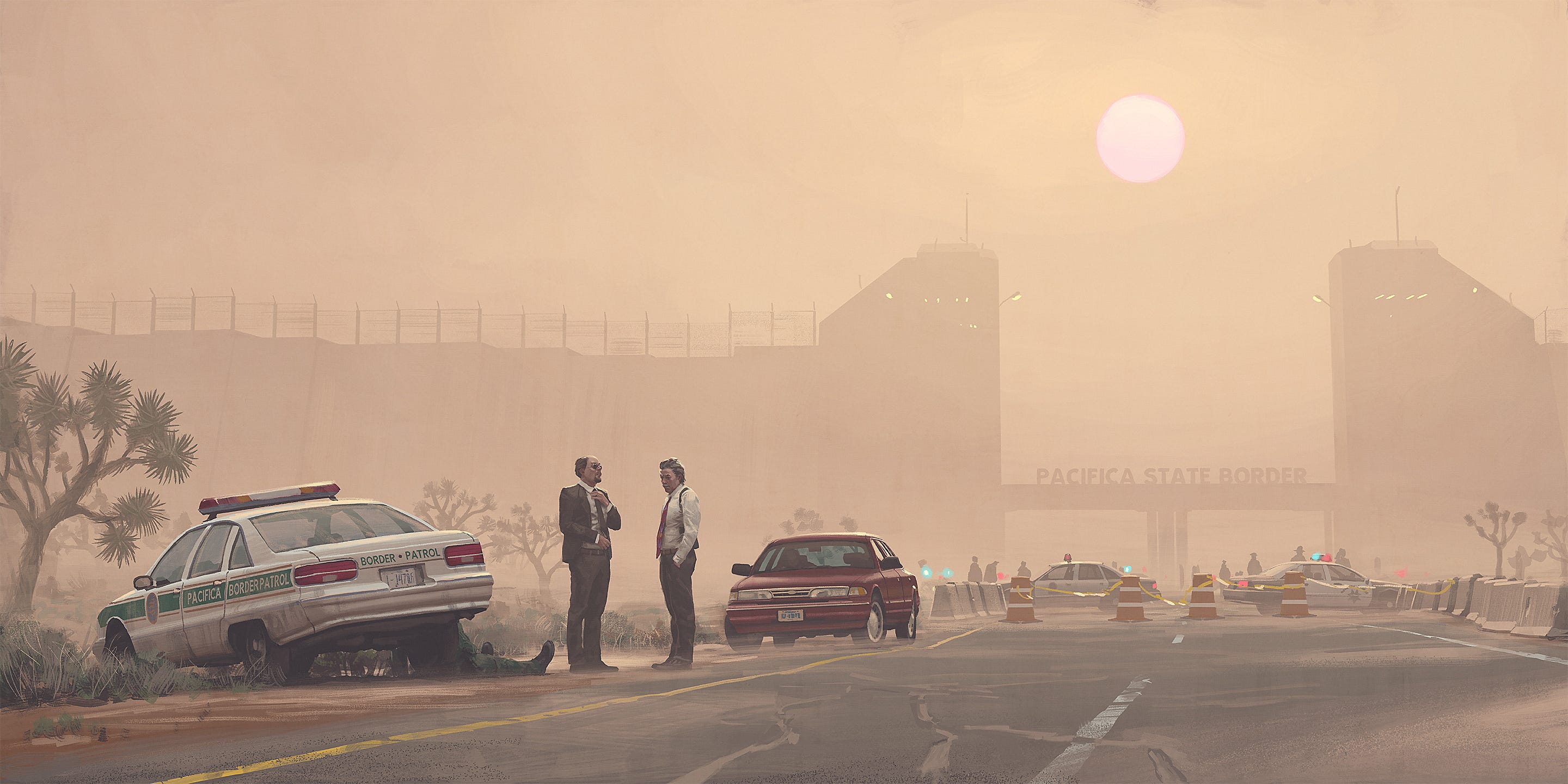
To trans people, this is an obvious progression on anti-trans policy; the instant something is declared “too dangerous” for the general public, the military seeks to make it a weapon, even if the idea is completely fucking stupid and an obvious violation of international law. It seems like a sort of inversion on that old adage, “to a hammer, every problem looks like a nail”— to those who believe that the problem with society is that too many nails stick out, they reach for any hammer they can find.
Personally, I think the history of hormone research & regulation is more interesting than any of this other stuff, but this essay is long enough already. Hopefully I will be back in a week or two with that, if it sounds interesting to you.
Suffice to say that Hegseth is either a fool or a liar; most likely, he is both. Even if testosterone did turn you into a supersoldier, only about ten percent of the US military ever sees combat long enough to make any use of their muscles. Most of the current-and-former military people I know are not in roles that require a rippling six-foot chad to achieve— they’re linguists, translators, largely desk-sitting people. They mostly work out just to stay within regs, not because they really need the brawn to do their job.
Besides, if my barely-over-five-foot-tall friend Tish— who grew up in poverty and joined the Army in the hopes that the GI Bill would send her to art school, which it didn’t, but still kicked ass up and down the block at her job as an EMT at an on-base hospital— is any indication: you don’t need testosterone to be strong, mentally or physically.
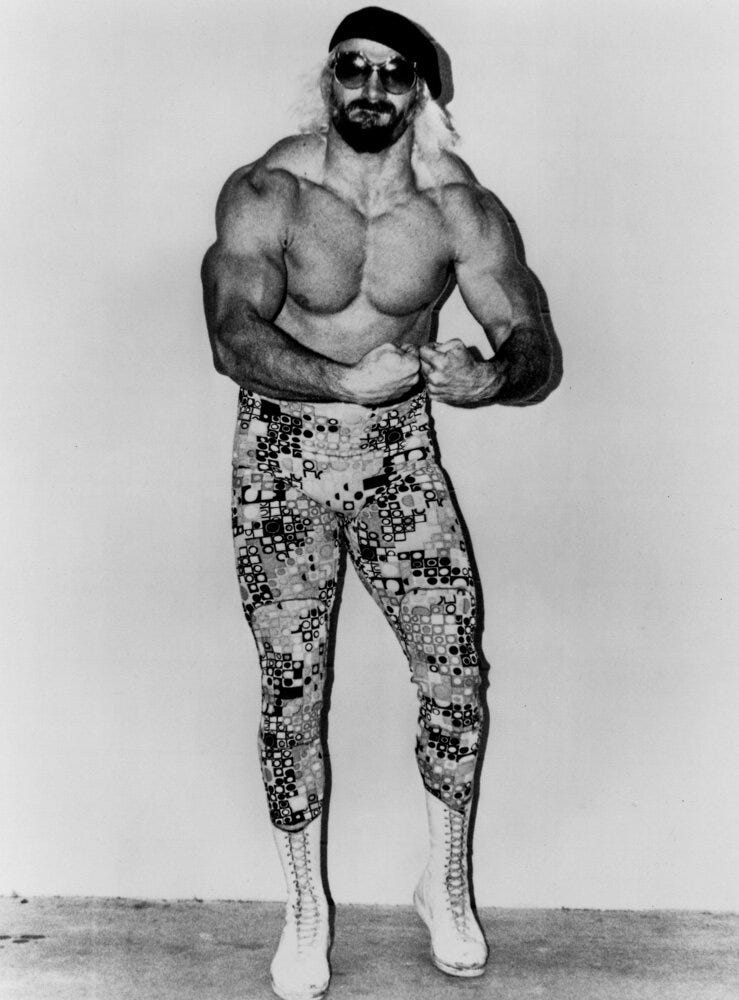
…But it seems you do need steroids to look strong. If your imagined idea of masculinity looks like Jesse Ventura c1984, then you’ve got no choice but to do as the bodybuilders do. You can tell just by looking that every shrink-wrapped manfluencer-type is on gear, it’s not even a question; bodybuilders with scruples will tell you outright, just so that you don’t get delusional about what sort of physique is possible without steroids. If we imagine that “strength” looks like 0% body fat, then a military doping program is just the natural progression.
Rather than just being friendlier to our diplomatic neighbors, it seems the government’s best idea is to simply threaten that the flexing will continue until morale improves. As if this will impress anyone.
That’s all for now. As always, thank you for reading.
Some things:
My old friend Tish is mostly offline these days, but you can still find some of her writing about being a military EMT on Medium. She also said some things about contemporary-ish trans discourse, the time she was carjacked by a random stranger she dubbed iPad Joe, and about the point of Disco Elysium. Tish is an intellectual and artistic father figure to me, and I know she would know what I mean by that.
Kelvin Blunt has recently written a few pieces about “military trade,” the erotic appeal of jackboots, and the history of soldiers selling sex to other men. Sex workers and queer men have always had quite a lot in common, another point-of-evidence that the sexes are not so disparate as they might appear, even in terms of our political troubles.
Lil Nas X is so cute it makes me angry. Come back to us, Doobie!!
Personally, I think the little wisp-staches are cute on both men and women, and the general consensus among trans people is that hormones make everyone hotter. There are certainly no shortage of fish in the sea, provided you’re willing to go fishing for them. Maybe bring a book— fishing can be pretty boring.
This is why I feel pretty repulsed by every book that Gretchen Felker-Martin has ever written, and feel pretty off-put by her online presence, her fanbase, and especially by everyone who praised or awarded her first book, Manhunt. “Testosterone turns you evil” is the core of all of her fiction.
I know how people feel about supernatural erotica these days, but frankly it’s hard to imagine a healthier way to digest this kind of anxiety.
Insert “this is my voice X months on T” TikTok meme here, etc.
I certainly was, with a mother who threw fits every time I wore holes in my jeans by scrombling around on the ground, as children do, and who drastically overreacted to my rare injuries. I’m sure the girlies whose families started them in gymnastics at age 5 are relatively fine.
If you haven’t read The Yellow Wallpaper short story by now, it’s a feminist classic.
I wrote before about coercion, the pressure of money on women’s choices in who to marry or what church to join or what job to take, and how I only have so much pity for them as a faggot who chose freedom over security. You can see how a chiral pressure is put upon men who have built up a serious career in the military, and who share my distaste for asking a husband to take care of you instead.
This sort of thing is one of the reasons I wanted to study biology in the first place back in the distant past— I thought that a lot of what people saw as “scientific inevitability” was a bit more complex and weird once you looked at the science itself and not just the mythos around it.
I do think that the failure to distinguish between signifiers of strength and strength in itself is probably going to absolutely fuck the current US Admin. It probably already has. Being unable to distinguish these is not just a weakness but a potentially fatal one, but I’m pretty sure this Admin would fire you for knowing what signifiers were in the first place. Knowledge of signifiers is itself a signifier of weakness, and so it is absent as a critical weakness seeps through them
🙏🏾🙏🏾🙏🏾